
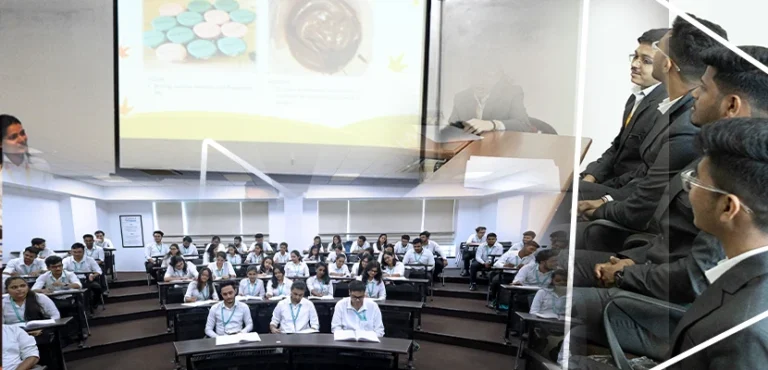
A Bachelor of Management Studies (BMS) is a versatile undergraduate programme for students who want to understand business, management, leadership, and organisational operations. But completing the degree is only the beginning. The real advantage of BMS lies in the wide range of career directions students can explore after graduation.
From marketing and finance to human resources, business development, consulting, operations, and entrepreneurship, a BMS graduate can build a career across multiple industries. The programme can also provide a foundation for postgraduate education such as an MBA, MMS, or PGDM.
Why Does BMS Offer Diverse Career Opportunities?
Businesses require professionals with knowledge of different functions. Marketing teams need people who understand customers and brands. Finance departments require analytical thinkers. Human resource teams need professionals who understand people and organisations. Operations teams need individuals who can improve processes and manage resources.
BMS introduces students to many of these business functions, helping them discover their interests before choosing a specific career direction.
At AIMSR, the BMS curriculum combines management fundamentals with practical activities such as case studies, projects, internships, simulations, and corporate interactions. Such exposure can help students connect classroom concepts with workplace situations.
1. Marketing and Brand Management
Marketing is one of the most popular career choices after BMS. Companies across industries need professionals who can understand customer behaviour, promote products, manage campaigns, and strengthen brand visibility.
BMS graduates can begin with positions such as:
- Marketing Executive
- Marketing Associate
- Brand Executive
- Digital Marketing Associate
- Sales and Marketing Executive
- Customer Relationship Executive
With experience and additional qualifications, professionals can progress into roles involving brand management, marketing strategy, market research, and campaign management.
2. Business Development
Business development focuses on identifying opportunities for business growth. Professionals in this field may research potential markets, communicate with prospective clients, build partnerships, and support revenue growth.
A BMS graduate can explore roles such as Business Development Executive, Business Development Associate, or Sales Executive.
Strong communication, negotiation, networking, analytical thinking, and relationship-management skills can be particularly valuable in this career path.
3. Finance and Banking
Students interested in numbers, financial information, investments, and business analysis can explore careers in finance and banking.
Possible entry-level opportunities include:
- Financial Analyst
- Finance Executive
- Banking Associate
- Accounts Executive
- Investment Operations Associate
Additional certifications or postgraduate education can help graduates specialise further in areas such as financial analysis, investment management, banking, or corporate finance.
4. Human Resource Management
Businesses depend on effective people management, making HR another important career area for BMS graduates.
Human resource professionals may work on recruitment, employee engagement, training, performance management, workplace policies, and talent development.
Graduates can explore roles such as:
HR Executive | HR Coordinator | Recruitment Executive | Talent Acquisition Associate | Training Coordinator
Students who enjoy communication, teamwork, problem-solving, and working with people may find HR particularly interesting.
5. Operations and Supply Chain
Operations professionals help organisations ensure that products, services, processes, and resources move efficiently. This makes operations an important function across manufacturing, retail, e-commerce, logistics, healthcare, technology, and other industries.
BMS graduates may begin in roles such as Operations Executive, Process Associate, Supply Chain Associate, or Operations Coordinator.
Knowledge of business processes, analytical thinking, communication, and problem-solving can support growth in this field.
6. Business Analytics and Consulting
As companies increasingly rely on data for decision-making, analytical skills have become valuable across management roles.
BMS graduates who develop additional capabilities in areas such as Excel, data visualisation, business analytics, and reporting can explore opportunities related to business analysis.
Consulting is another potential direction. Entry-level professionals may assist with research, market analysis, business reports, process improvement, and client projects.
7. Digital Marketing
The growth of digital platforms has created new career opportunities for management graduates. Digital marketing combines business understanding with online communication, content, advertising, analytics, and customer engagement.
Graduates can explore roles such as:
- Digital Marketing Executive
- SEO Executive
- Social Media Executive
- Performance Marketing Associate
- Content Marketing Associate
Professional certifications and hands-on experience with digital tools can further strengthen employability.
8. Entrepreneurship and Startups
BMS is not limited to traditional employment. Students with entrepreneurial ambitions can use their management knowledge to develop and manage their own ventures.
Understanding marketing, finance, operations, customer behaviour, business strategy, and human resources can provide a useful foundation for aspiring entrepreneurs.
The journey may begin with a small business, family enterprise, online venture, startup, or innovative business idea.
9. Management Trainee Roles
Many organisations recruit fresh graduates through management trainee programmes. These roles can provide exposure to different business functions while allowing employees to understand organisational processes.
For a BMS graduate, a management trainee position can be a useful starting point for discovering a preferred specialisation and developing workplace experience.
Skills That Can Improve Career Prospects After BMS
A degree is important, but employers also value practical and professional skills. BMS students can improve their career readiness by developing:
- Communication and presentation skills
- Analytical and critical thinking
- Leadership and teamwork
- Negotiation
- Problem-solving
- Digital literacy
- Business writing
- Data analysis
- Time management
- Adaptability
AIMSR specifically highlights skills such as critical and analytical thinking, communication and negotiation, problem-solving, and digital skills as part of its BMS learning outcomes.
Higher Studies After BMS
Not every graduate needs to enter the workforce immediately. Higher education can help students specialise and prepare for advanced professional roles.
Popular options after BMS include:
MBA: Suitable for students seeking advanced business and management education.
MMS: A postgraduate management programme that can help students deepen their understanding of management.
PGDM: Another pathway for students looking for specialised management education.
Professional Certifications: Students can also consider certifications in finance, digital marketing, analytics, human resources, project management, or related fields.
AIMSR’s BMS information also identifies MBA, MMS, PGDM, and professional certifications as possible higher-study pathways after graduation.
Why Practical Exposure Matters
Career preparation should begin during college rather than after graduation. Internships, live projects, presentations, case studies, industry interactions, and workshops can help students understand professional expectations.
AIMSR’s BMS programme includes practical learning opportunities and industry-oriented activities designed to help students develop workplace-relevant capabilities.
This type of exposure can also help students make more informed career decisions. Instead of choosing a specialisation based only on assumptions, students can gain experience and identify the areas that match their interests and strengths.
Conclusion
The career opportunities after BMS extend far beyond a single job profile. Graduates can explore marketing, finance, HR, business development, operations, analytics, consulting, digital marketing, banking, entrepreneurship, and management trainee roles.
The best career path depends on an individual’s interests, skills, experience, and long-term goals. Students who combine their BMS education with internships, practical projects, digital skills, communication abilities, and relevant certifications can build a stronger foundation for professional growth.
For those who want to continue learning, postgraduate programmes such as MBA, MMS, and PGDM can provide another route toward specialised management careers. Ultimately, BMS can serve as a starting point from which students can shape a career that matches their ambitions in the evolving world of business.
FAQs: Career Opportunities After BMS
- What are the career opportunities after BMS?
BMS graduates can explore careers in marketing, finance, HR, business development, operations, consulting, analytics, banking, digital marketing, and entrepreneurship. - Can I get a job after completing BMS?
Yes. Graduates can apply for entry-level positions such as Marketing Executive, HR Executive, Business Development Executive, Finance Executive, Operations Executive, and Management Trainee. - Is BMS good for a career in marketing?
Yes. BMS provides exposure to business and marketing concepts, while internships and practical projects can help students develop industry-relevant experience. - Can BMS graduates work in banking and finance?
Yes. Students interested in finance can explore banking, financial analysis, accounting, and related entry-level roles. Additional qualifications can help with specialisation. - What skills should I develop after BMS?
Communication, analytical thinking, leadership, problem-solving, digital literacy, data analysis, teamwork, and negotiation can strengthen a BMS graduate’s career prospects. - What is the salary after BMS?
Salary varies considerably based on the job role, industry, employer, location, skills, internships, and experience. It is better to evaluate specific career roles rather than assume one fixed salary for all BMS graduates. - Can I pursue higher studies after BMS?
Yes. Students can consider MBA, MMS, PGDM, specialised master’s programmes, and professional certifications depending on their career goals. - How can I improve my career prospects after BMS?
Build practical experience through internships and projects, develop digital and analytical skills, improve communication, participate in industry activities, and consider relevant certifications or postgraduate education.